This is valid for Blender from version 2.8 until the current ones. The old versions were limited to 32 channels, but from ver. 3.0 they increased that to a maximum of 128 channels, which is a great improvement.
So, in reality, you don’t have to add any channels, because there are a lot of them already there.
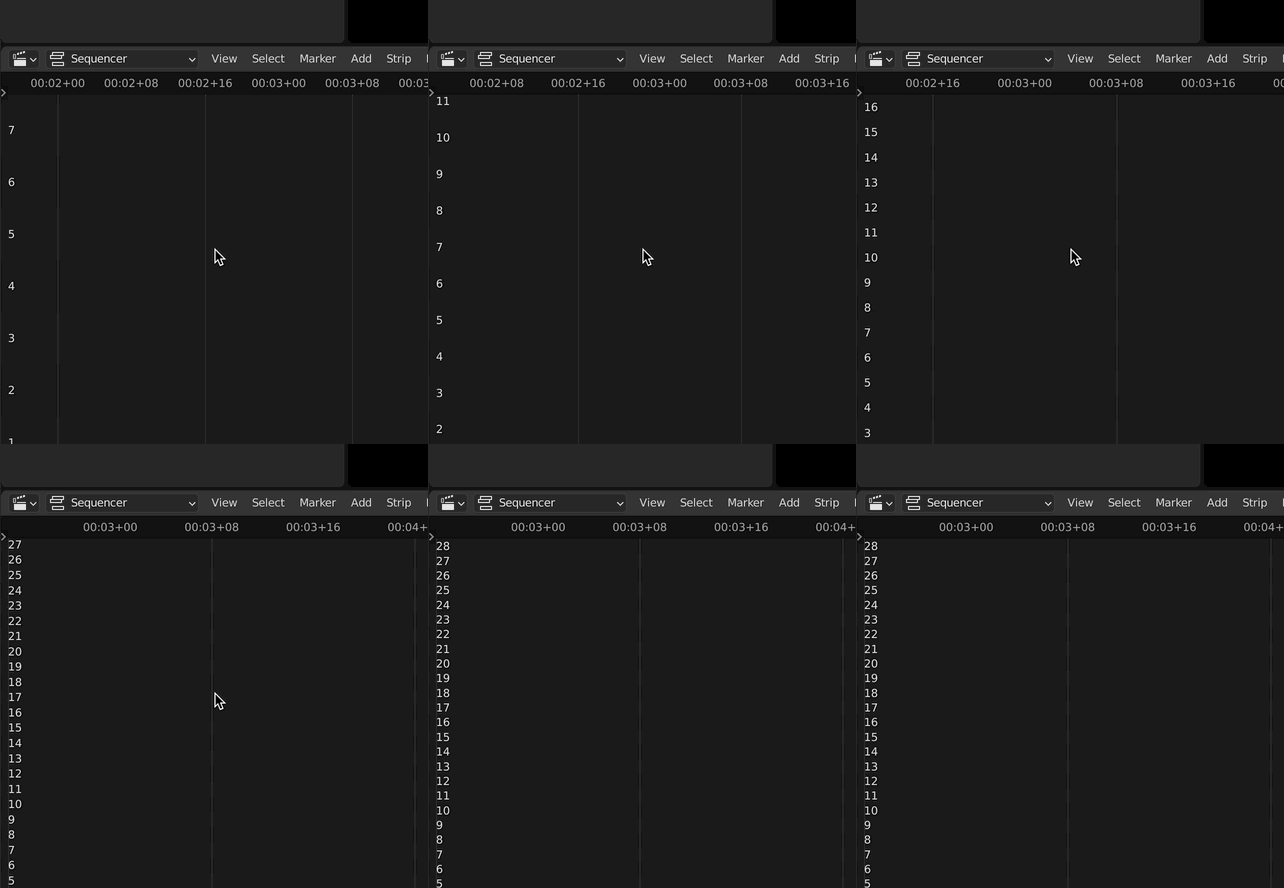
The way to see and access all the channels is you can scale the y scale as you would do in viewport (zoom in and out) using CTRL+ middle-mouse-button.
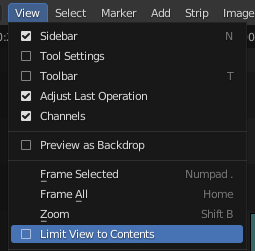
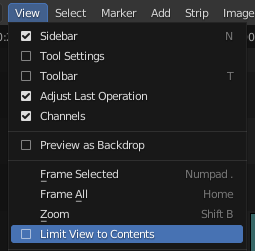
IMPORTANT NOTE: If it doesn’t work and you can’t see them by default, the view will often seem limited ‘to 7, 8 to 10 channels if ‘View’ > ‘Limit view to contents’ is checked.
Once deselected, you should be able to see as many channels as you like.
As probably all the web devs know, one of the best image sliders or carousels is the OWL carousel.
It is fully open source (free as in beer), it has very well-made documentation and is supported by a huge community. Not to mention, for WordPress lovers it has a huge amount of implementations as WordPress OWL carousel plugin.
Still, even though it has tons of options, there are some custom actions that it doesn’t do out of the box. One of them I had to do recently is to add a special CSS or animation effect to the first slide of the carousel and I found no way to do that by default.
So I researched and I came up with this idea: I need to capture the active slides and dynamically add a new class to the first one of them.
A very basic html structure generated by the OWL slider would be:
<div class="owl-carousel owl-theme">
  <div class="owl-item"> Your Content </div>
  <div class="owl-item"> Your Content </div>
  <div class="owl-item active"> Your Content </div>
  <div class="owl-item active"> Your Content </div>
  <div class="owl-item active"> Your Content </div>
  <div class="owl-item"> Your Content </div>
  <div class="owl-item"> Your Content </div>
</div>
So as you see the “active” classes are dynamically changed for the slides currently in “view”, depending on how many there are set in the initial JS settings.
So, in order for us to attach the desired classes, we need to tap into the “owl-carousel” DOM structure and manipulate it also dynamically by using the “translated.owl.carousel” native event of our OWL carousel.
An example of how that can be done is:
 var owlsld = jQuery(".owl-carousel");
  function owlsldClasses() {
    owlsld.each(function () {
      var total = jQuery(this).find(".owl-item.active").length;
      jQuery(this).find(".owl-item").removeClass("firstactiveitem");
      jQuery(this).find(".owl-item").removeClass("lastactiveitem");
      jQuery(this)
        .find(".owl-item.active")
        .each(function (index) {
          if (index === 0) {
            jQuery(this).addClass("firstactiveitem");
          }
          if (index === total - 1 && total > 1) {
            jQuery(this).addClass("lastactiveitem");
          }
        });
    });
  }
  // owlsldClasses();
  owlsld.on("translated.owl.carousel", function (event) {
    owlsldClasses();
  });
As you can see, after that the HTML structure will have two new classes attached to the first and last active slides:
<div class="owl-carousel owl-theme">
<div class="owl-item"> Your Content </div>
<div class="owl-item"> Your Content </div>
<div class="owl-item activefirstactiveitem"> Your Content </div>
<div class="owl-item active"> Your Content </div>
<div class="owl-item activelastactiveitem"> Your Content </div>
<div class="owl-item"> Your Content </div>
<div class="owl-item"> Your Content </div>
</div>
Then you can add the desired look to that first slide with CSS:
In recent years, public art has become an increasingly popular way for communities to express themselves and beautify their neighbourhoods. Mural art is a popular form of public art that has been used to transform drab walls and spaces into vibrant, eye-catching works of art.
Recently, a local art community from Reading in the United Kingdom’s Berkshire completed a mural art project that has captured the attention of residents and visitors alike. This is one of the many creative activities they have planned for the next future.
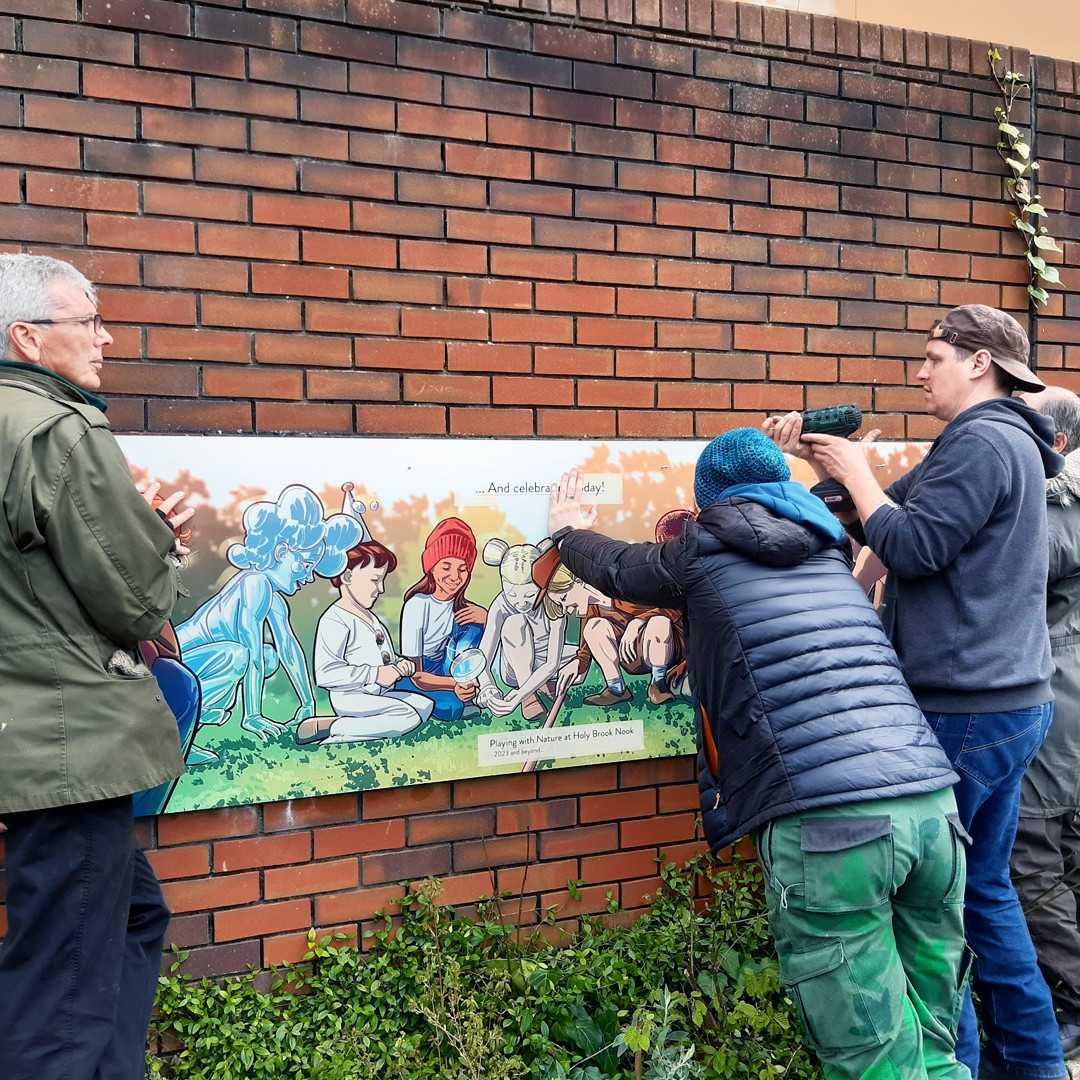
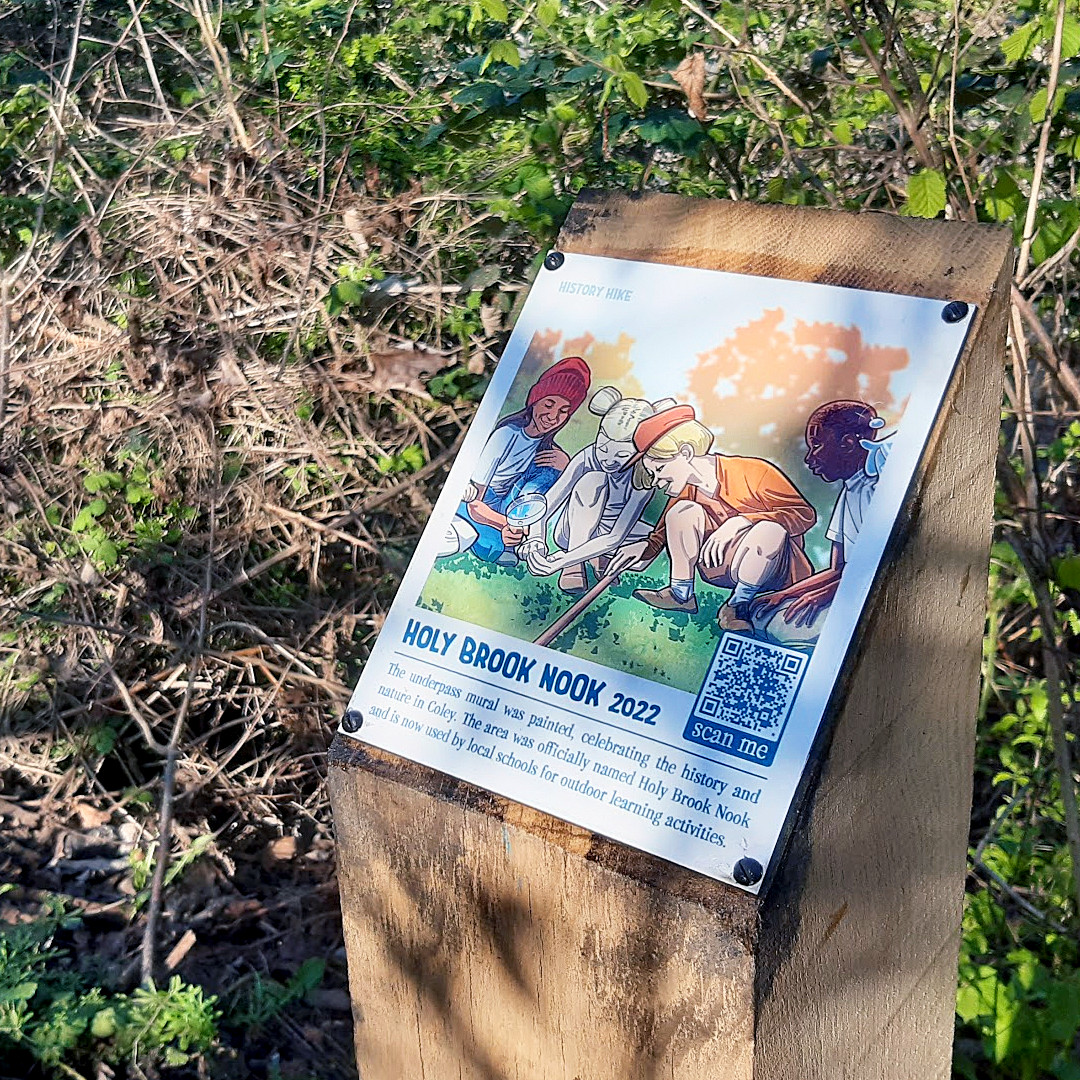
The Holy Brook Nook project was born at the beginning of 2022 when Natalie Ganpatsingh started putting the ideas for the project down on paper. Natalie is the director of Nature Nurture, an award-winning social enterprise whose mission is to engage the people of Reading with nature and the heritage on their doorstep. Natalie already knew a few great local artists from Commando Jugendstil and others from another project that they did in Reading – the murals of Reading Hydro – and was interested in including a public art component in her project.
They started discussing various ideas and together they understood how important that part of the project was, not just because of the art itself, but also for its potential to get the people living in the neighbourhood involved. So that way public art became – as it always does in our projects – a way to create community and to connect with the people of the town.
So this newly formed art community, consisting now of a bigger group of passionate artists and supporters, began the mural art project as a way to celebrate the town’s history and culture. The community had been looking for ways to revitalize the downtown area and believed that a series of murals would do just that. After many meetings, brainstorming sessions, and discussions, the artists came up with a plan for a series of murals that would depict different aspects of the town’s heritage and community.
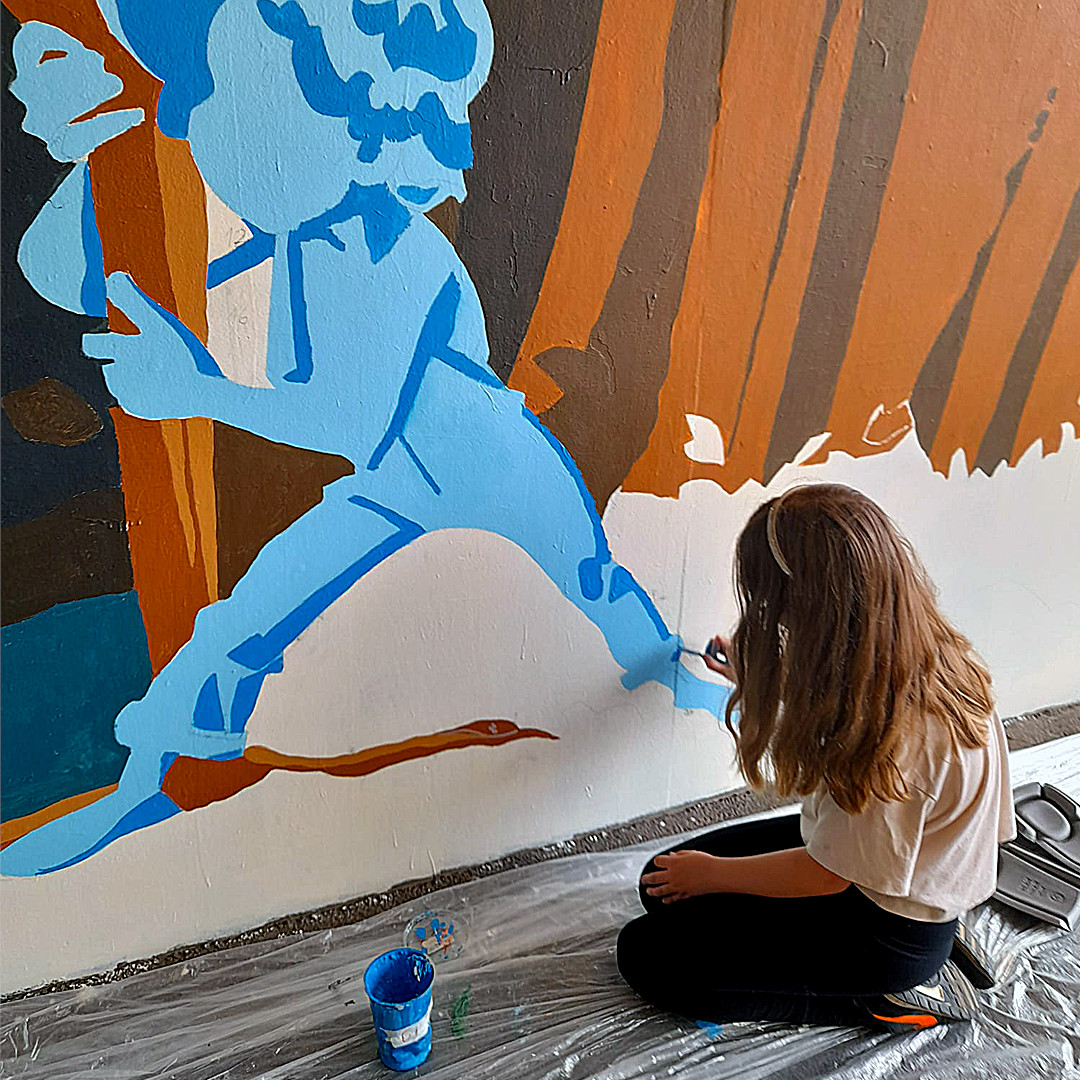
At some point, they obtained some funding from Reading Borough Council’s Community Infrastructure Levy, which helped the project quite a bit, so a few months later, with the design for the mural ready and all the materials loaded on a small cart, they started painting the nature wall of the mural and the rest, as they say, is history.
We watched their progress closely and were impressed by the speed and abnegation shown by all the artists and the rest of the volunteers taking part in the activities. We asked them to present their vision in a few words:
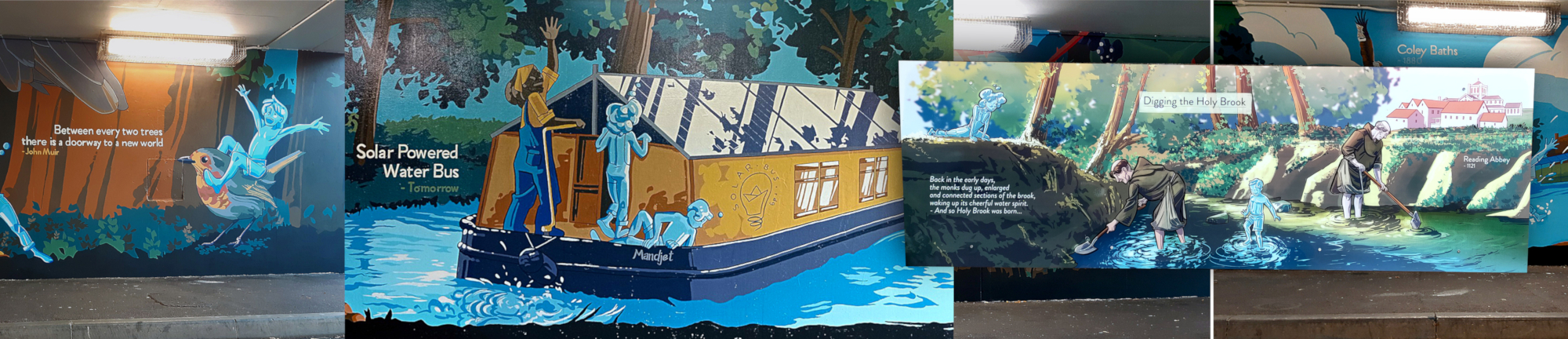
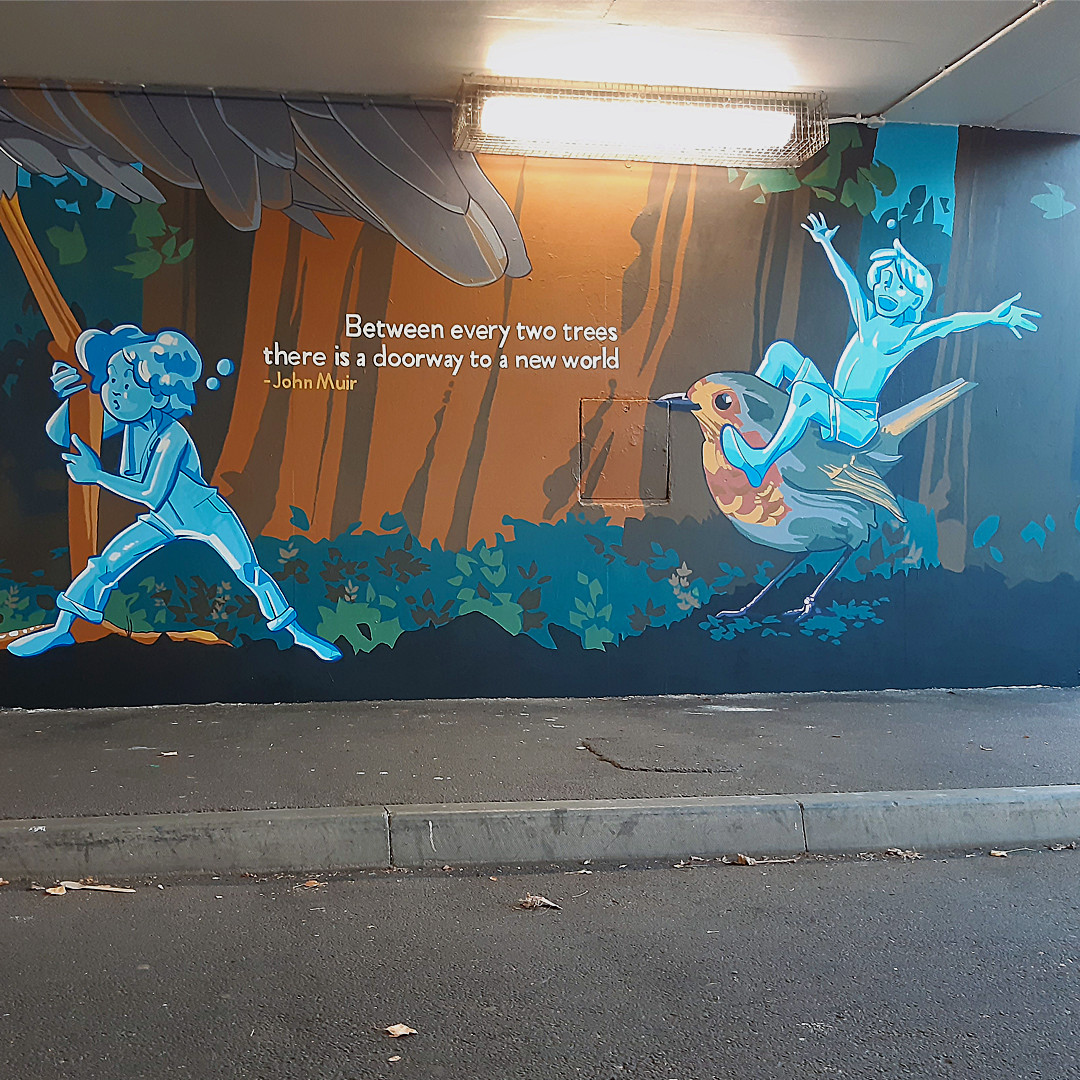
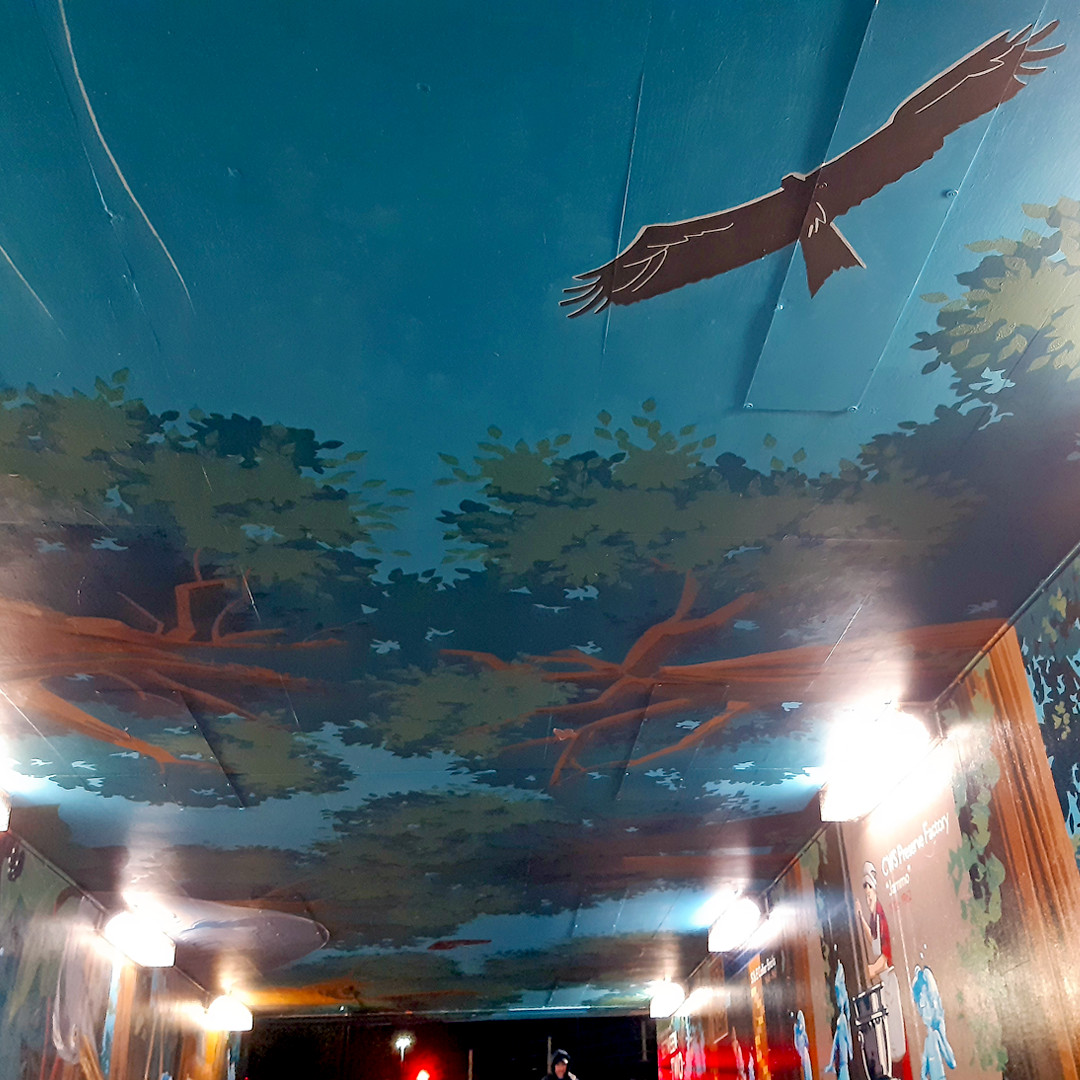
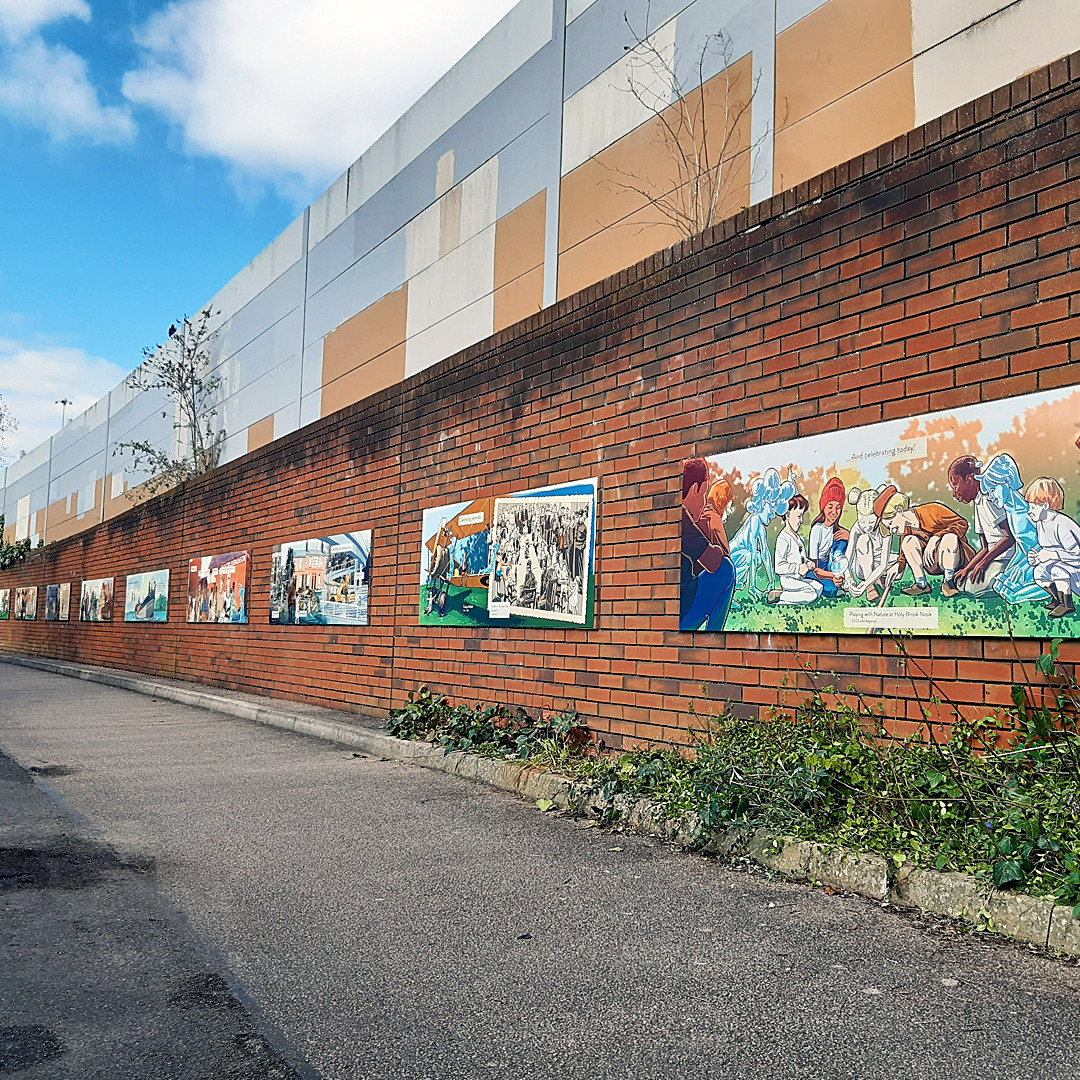
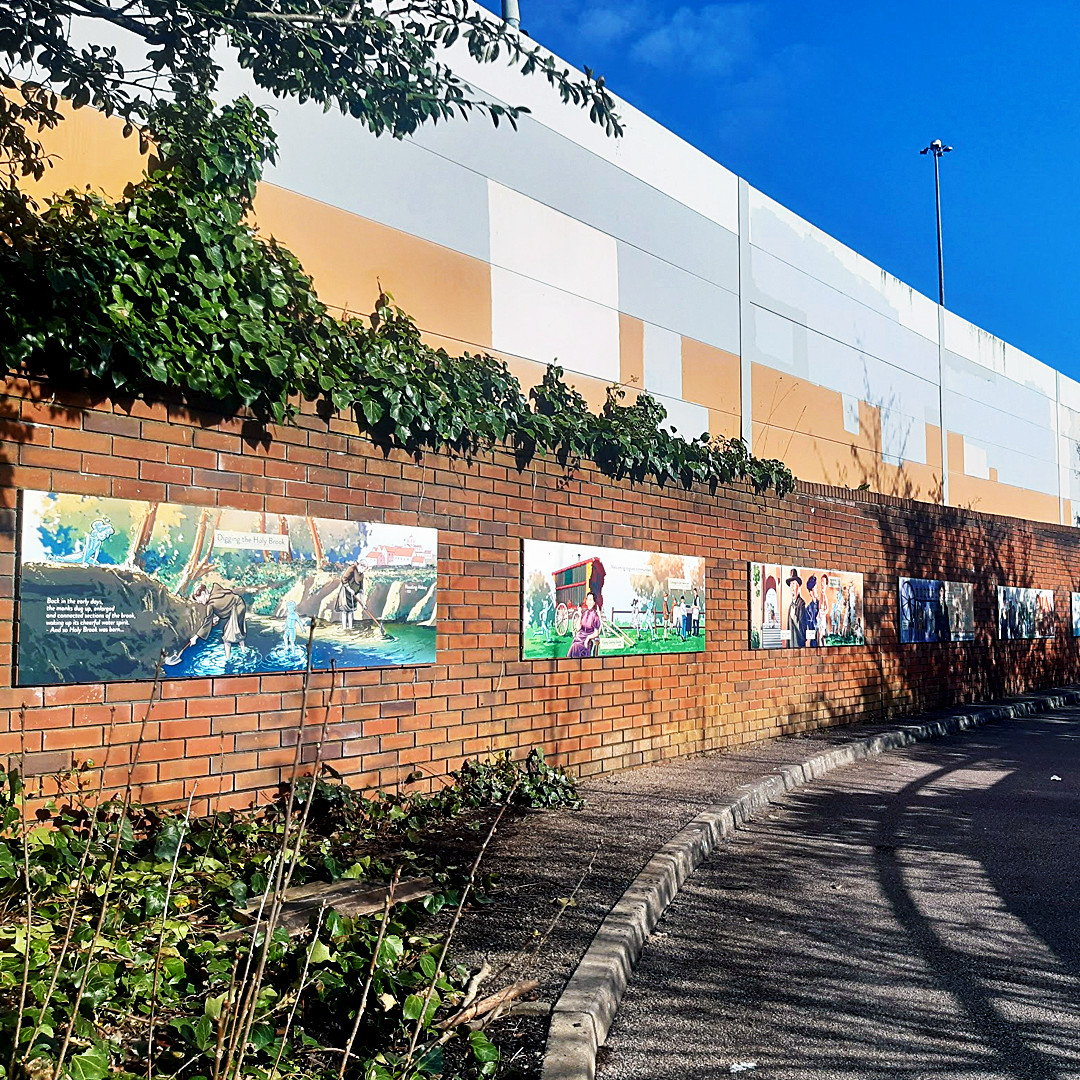
“One of our most ambitious projects is the creation of a 150ish square meters mural in the underpass leading towards Holy Brook Nook, an abandoned strip of land that has been converted into a green area for the kids of the local schools in the area of Coley, Reading (UK). Over 44 days of work, under any weather condition imaginable, and with the help of 56 volunteers we painted an original design that includes a wall dedicated to local nature, the opposite wall dedicated to local history, and the ceiling that merges the two scenes. The design sees the personifications of the two waterways that encircle the underpass, HolyBrook, and Kennet, walking and playing with the other characters or the environment. The mural is called Between Two Waters and is about highlighting the beauty of what we have in common and what we have built together.
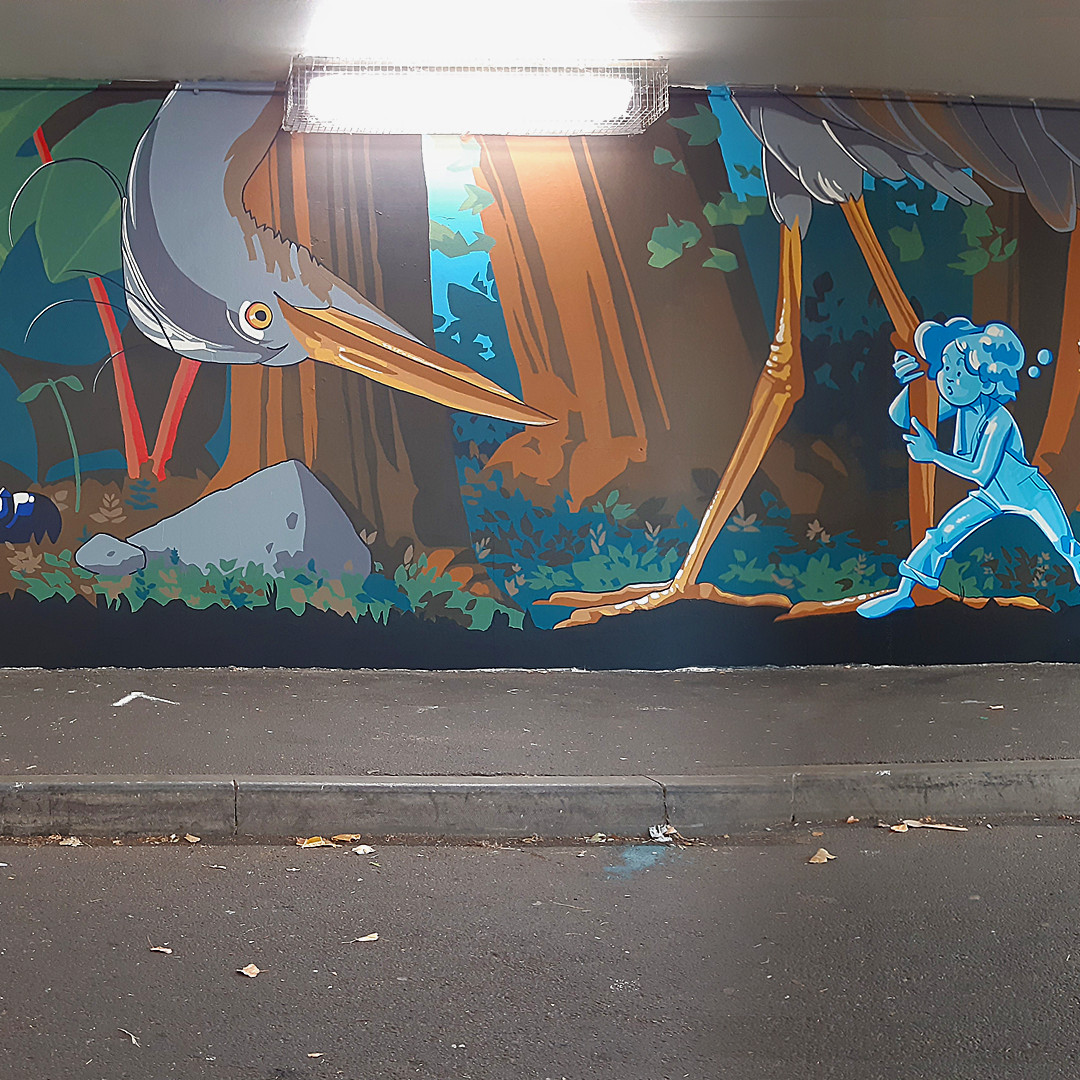
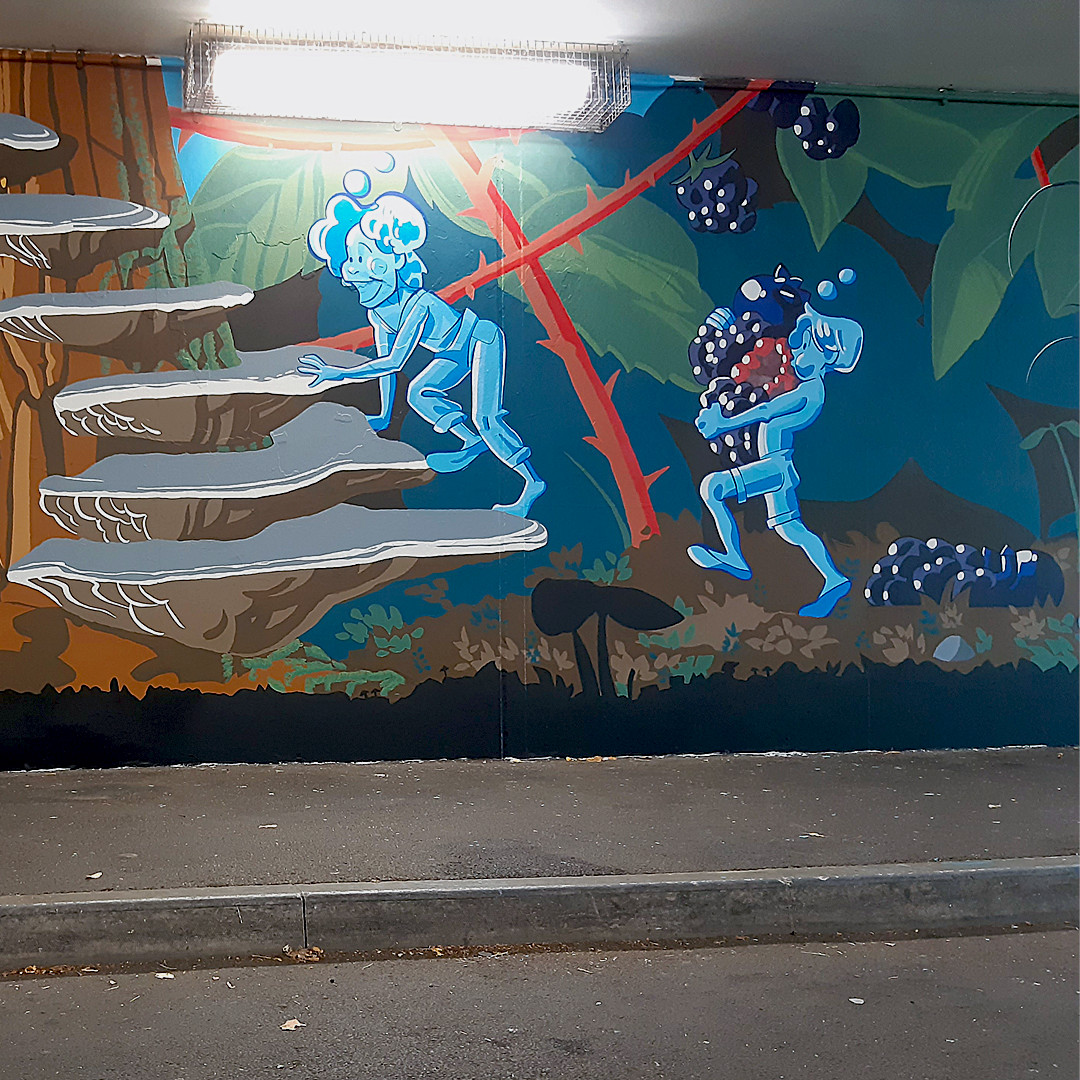
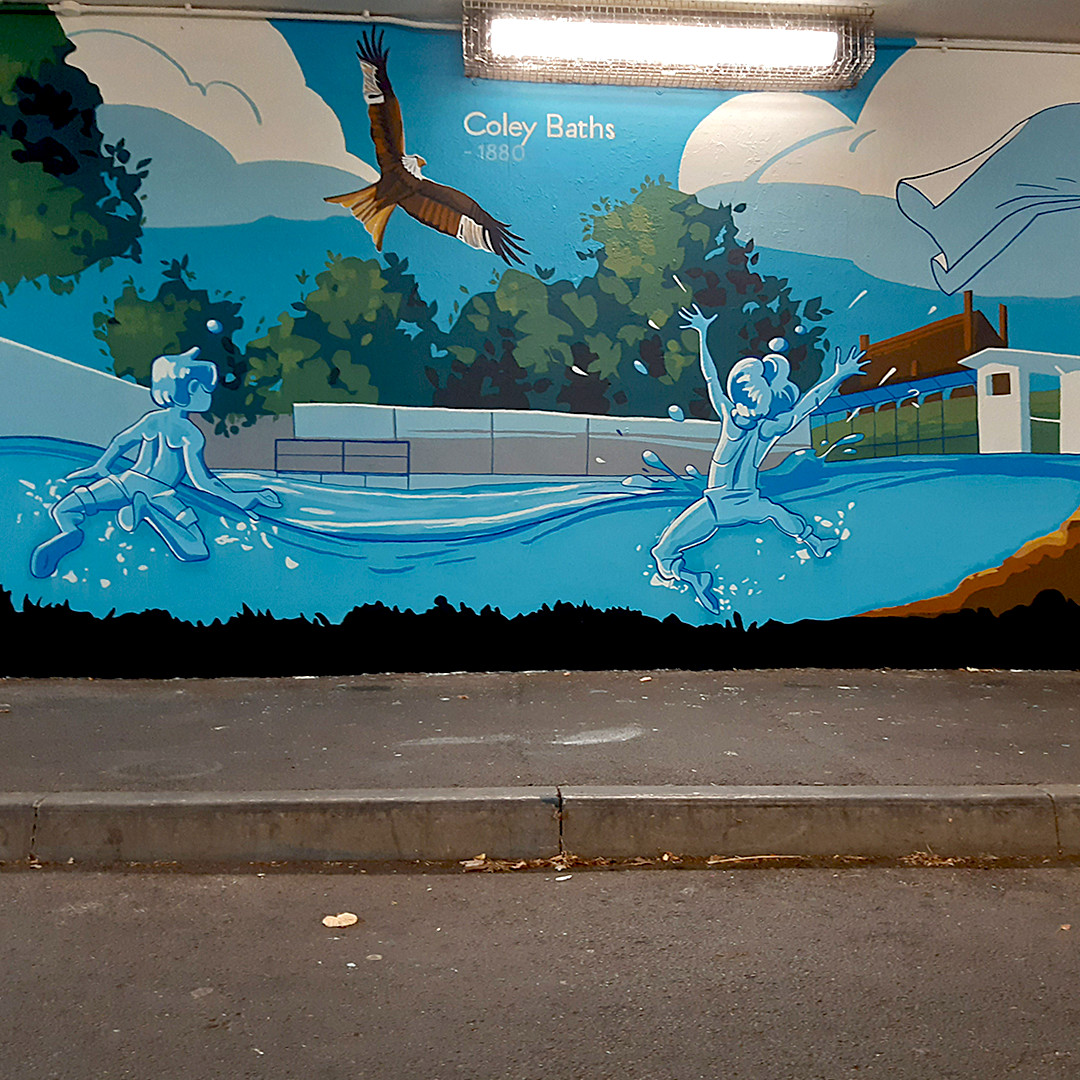
– On the nature wall you can see the characters playing with a robin and a heron, picking up some berries and climbing the bracket mushrooms of a tree (a nod to the Coley steps, a local historical feature now demolished), and then playing in the water in the Coley Baths, together with a red kite.
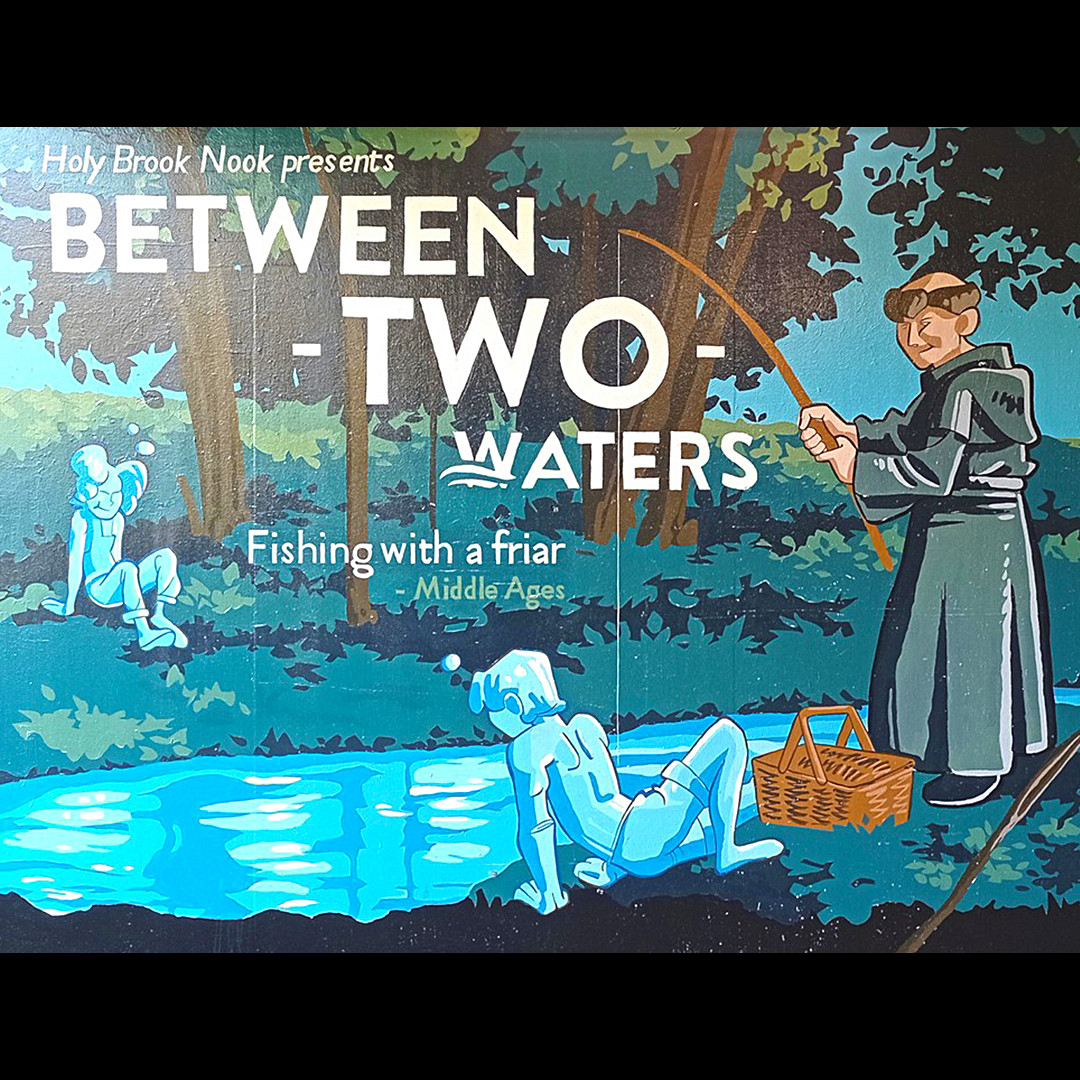
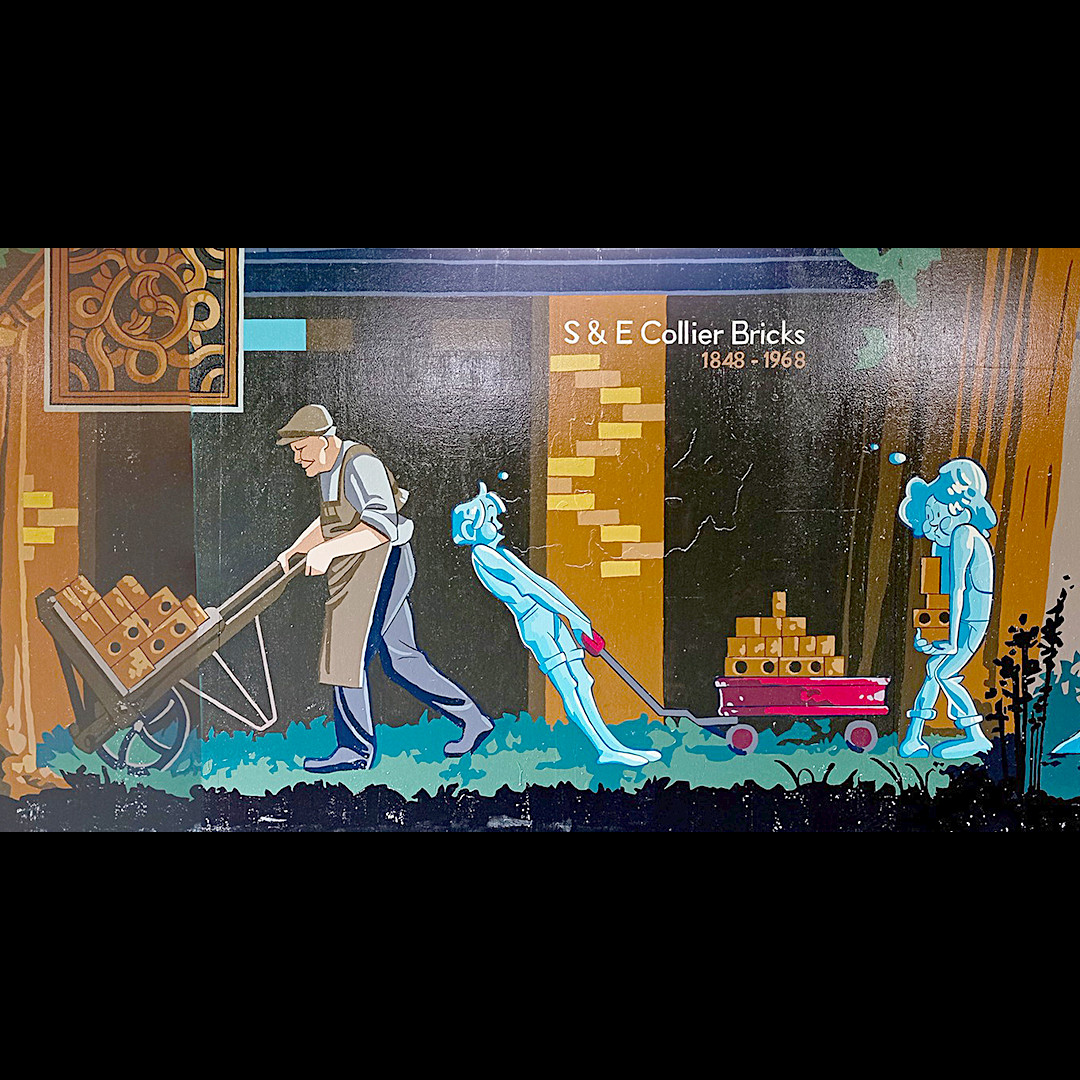
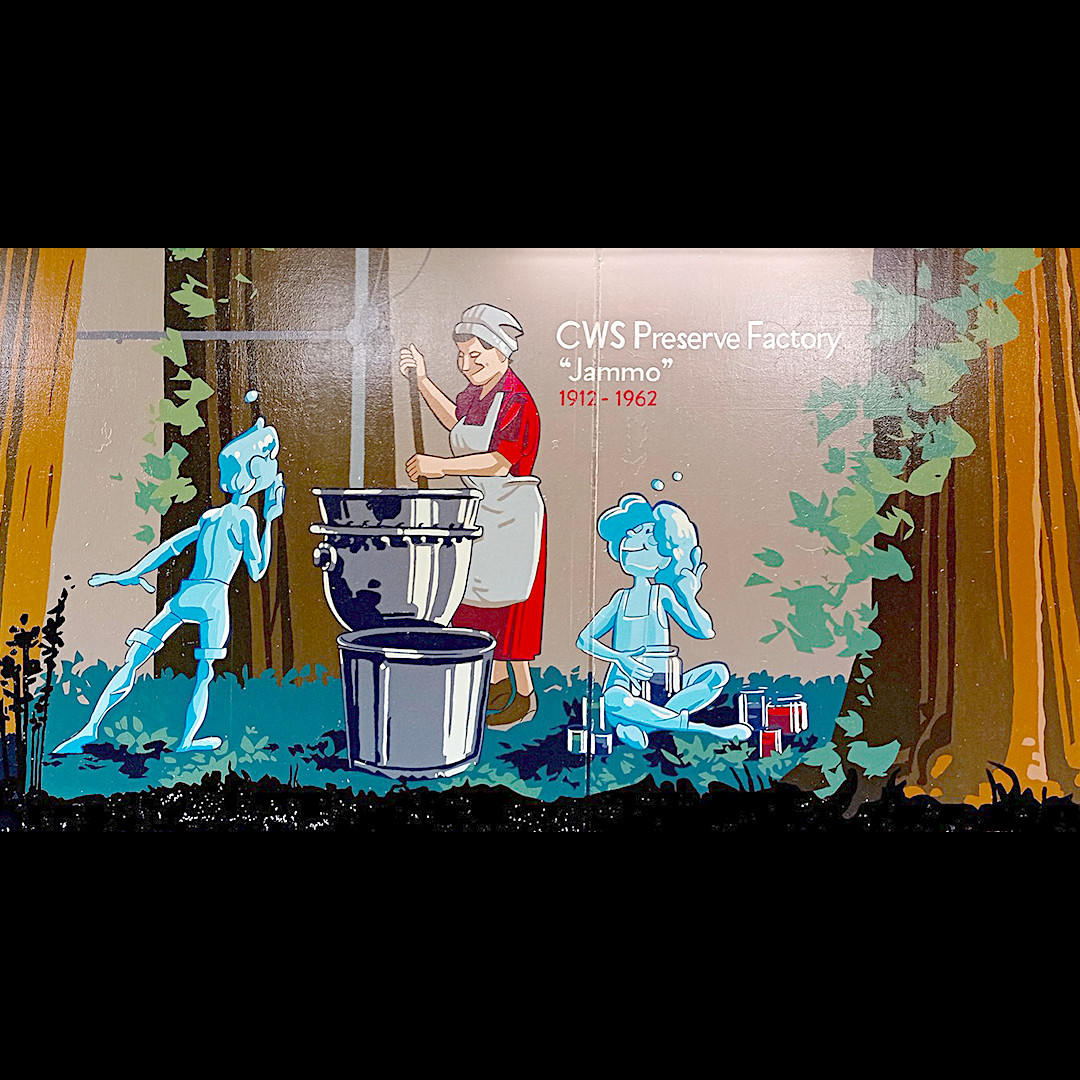
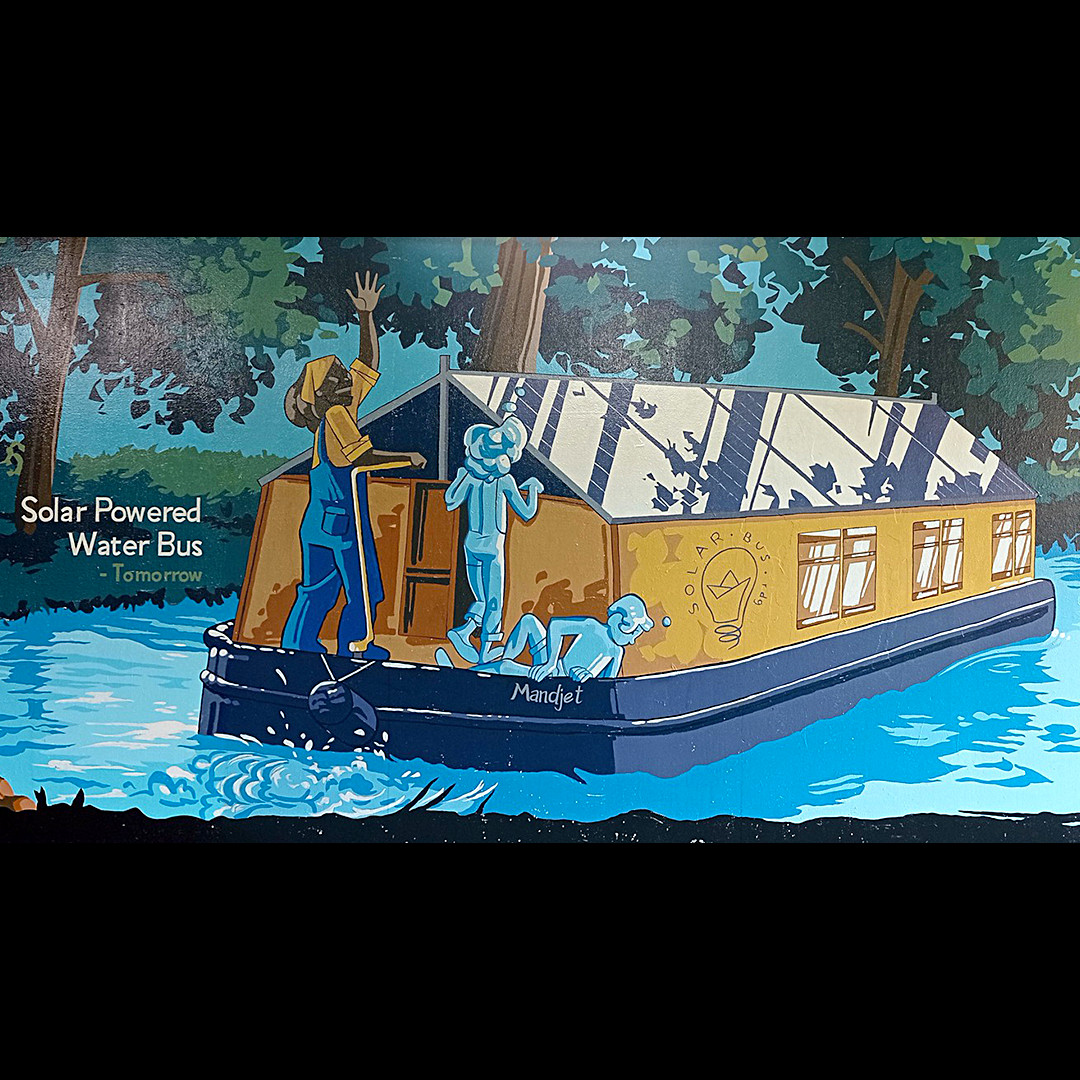
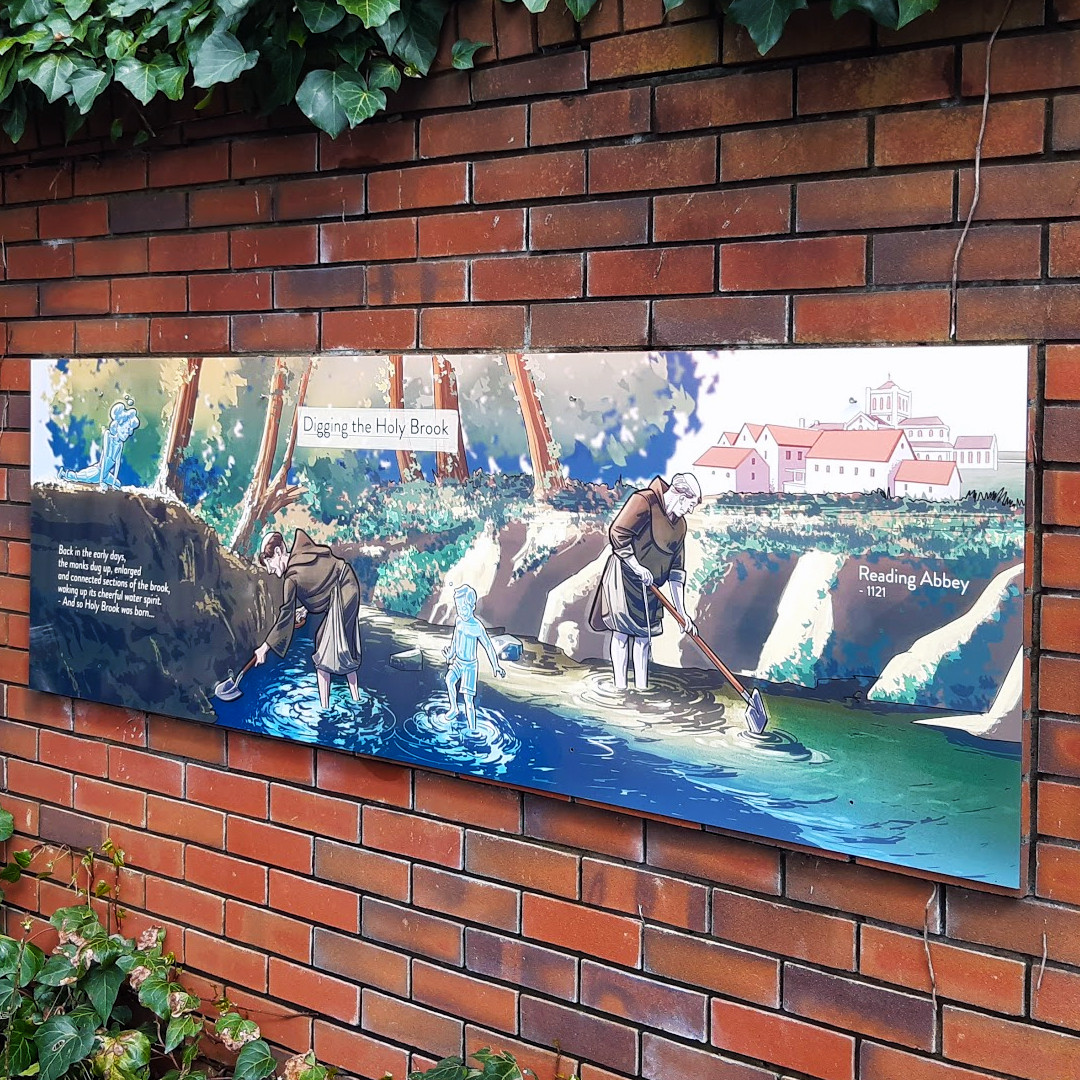
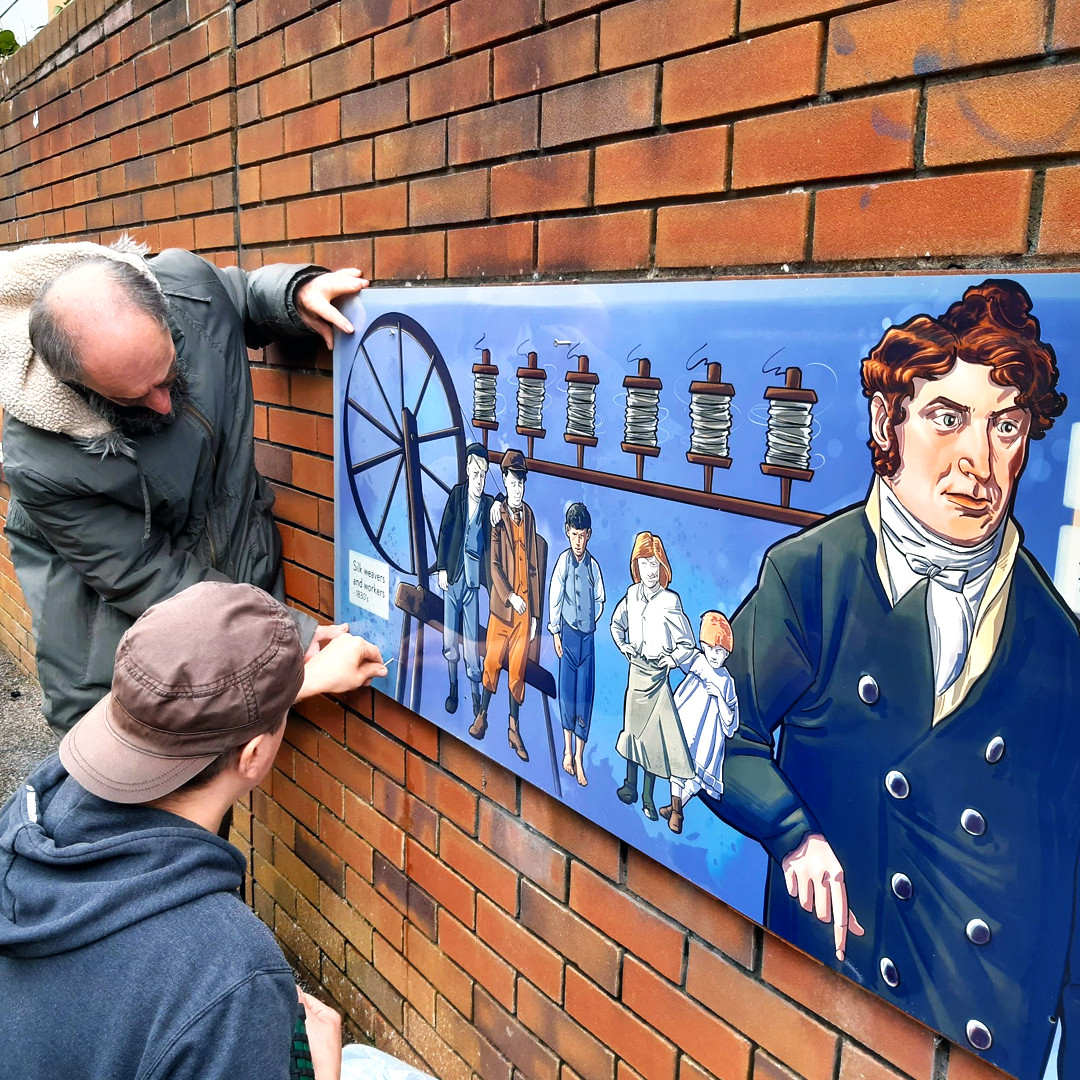
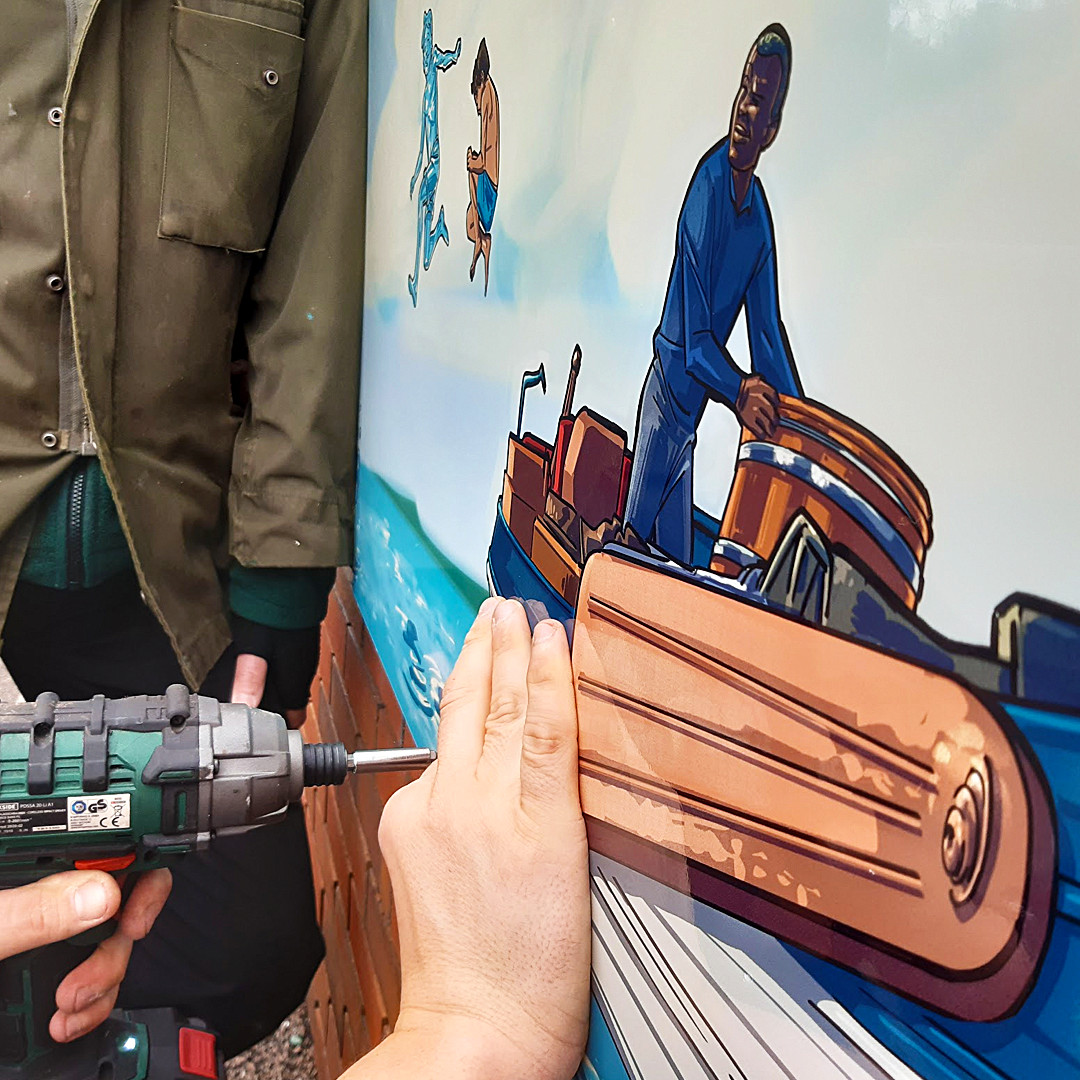
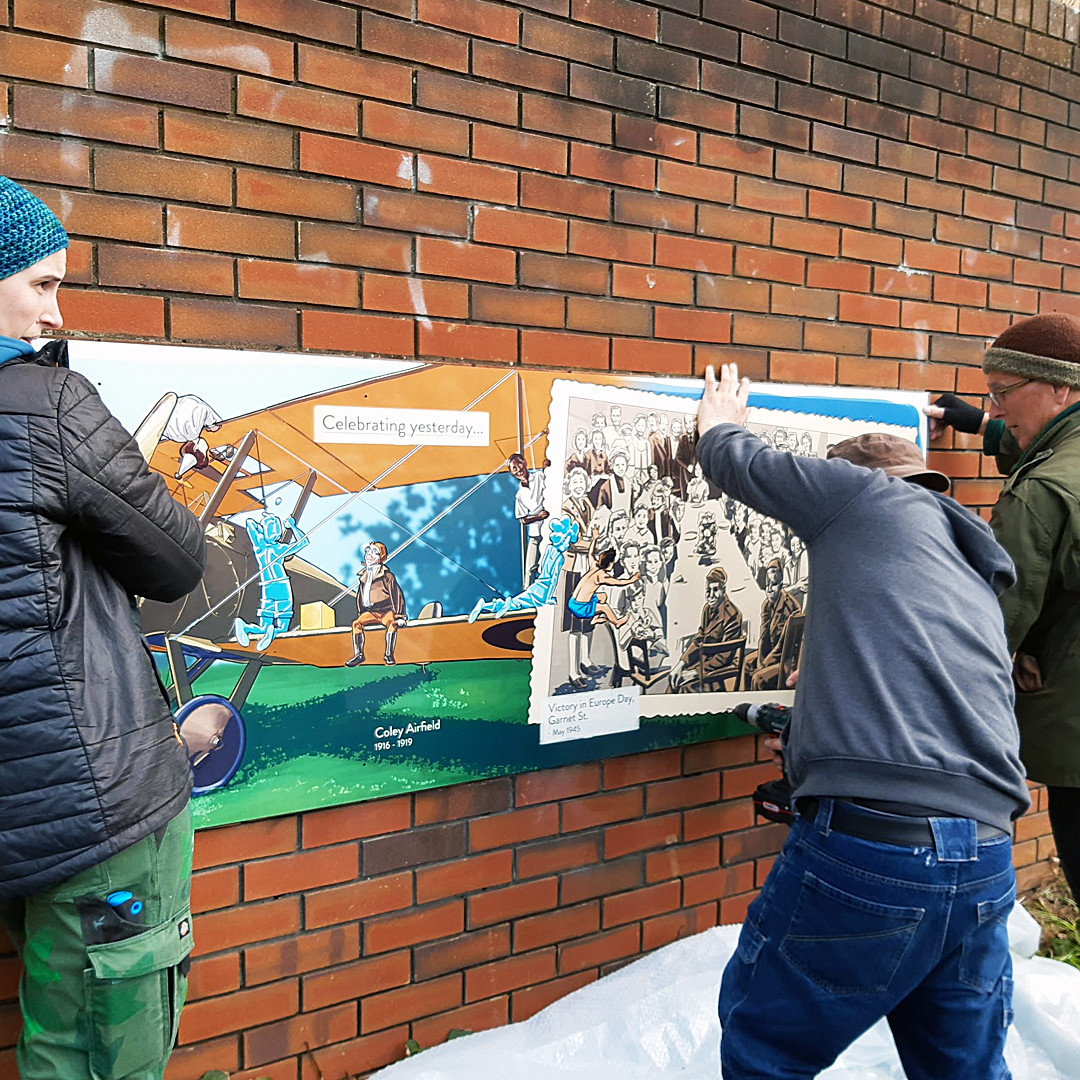
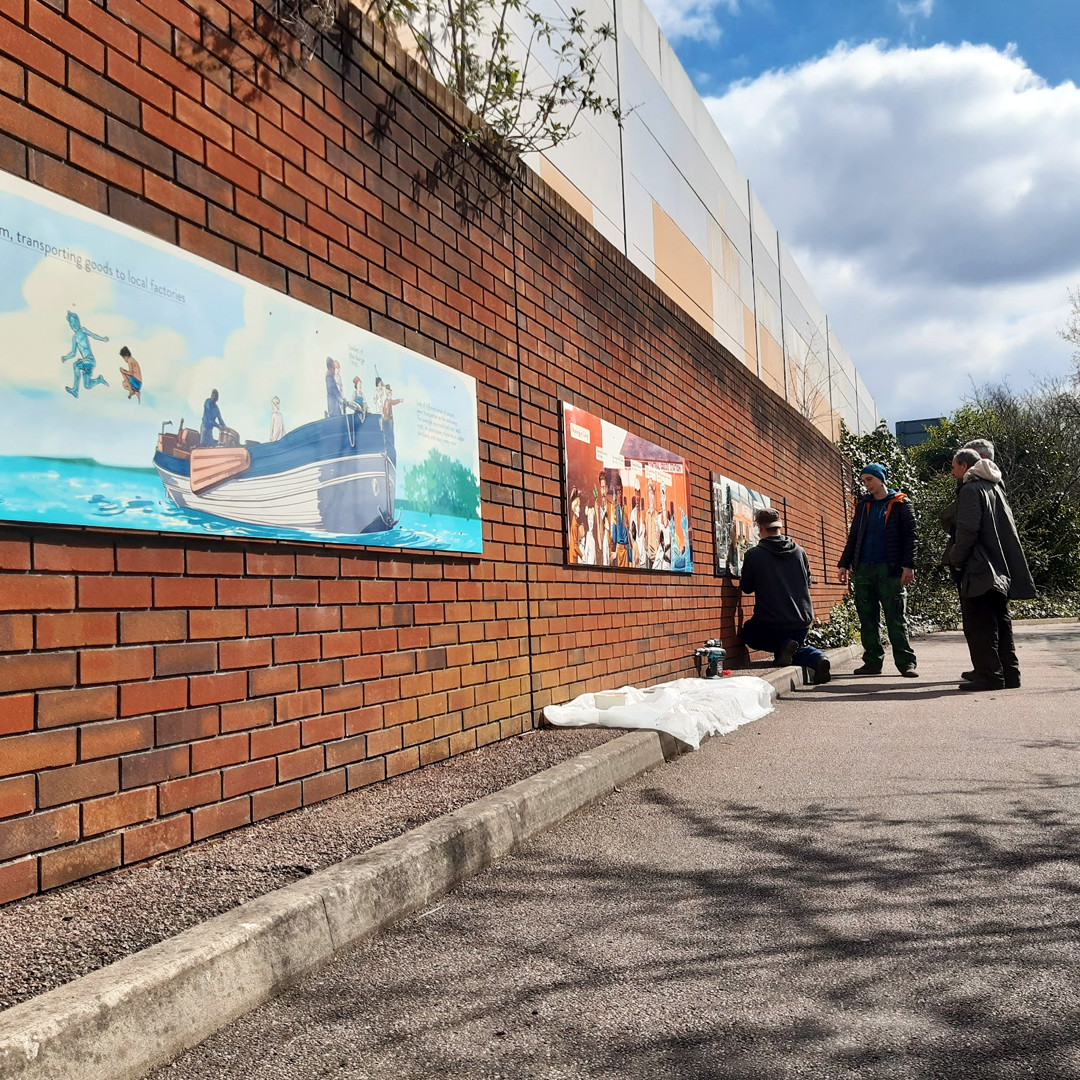
– On the history wall you can see the characters fishing with a monk, helping (with not much success) the local industries of the brickmakers and of the jam factory, and sailing on a solar-powered water bus, one of our visions for a sustainable future.
The feedback has been overwhelmingly positive, with locals turning into mural painters just because they felt a connection with the project. We had commuters, passers and kids modifying their route to work or school just to see the progress on the artwork. Elderly ladies and gentlemen were so kind to share their personal local stories, and donated books and brushes to help complete the mural.“
The success of this mural art project is a testament to the power of community and the value of public art. It shows that when a group of passionate individuals come together to create something meaningful, they can make a real difference in their community. This art community has demonstrated the impact that art can have in bringing people together, promoting local pride, and transforming public spaces.
The completed murals have been a hit with the community, attracting visitors from all over the region. Residents have expressed their appreciation for the way the murals have brought new life and energy to the downtown area. The murals have become a source of pride for the community, and they have sparked a renewed interest in public art.
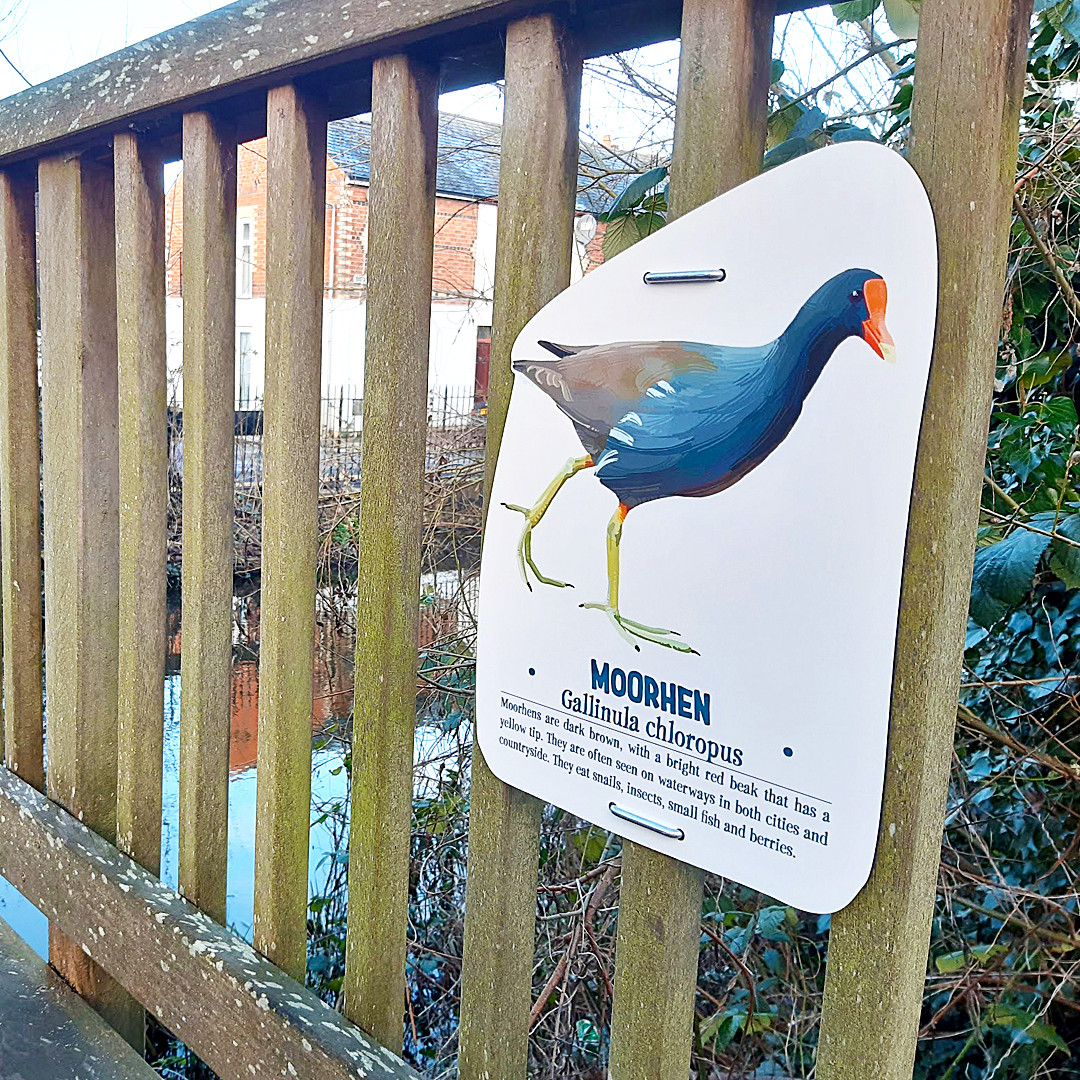
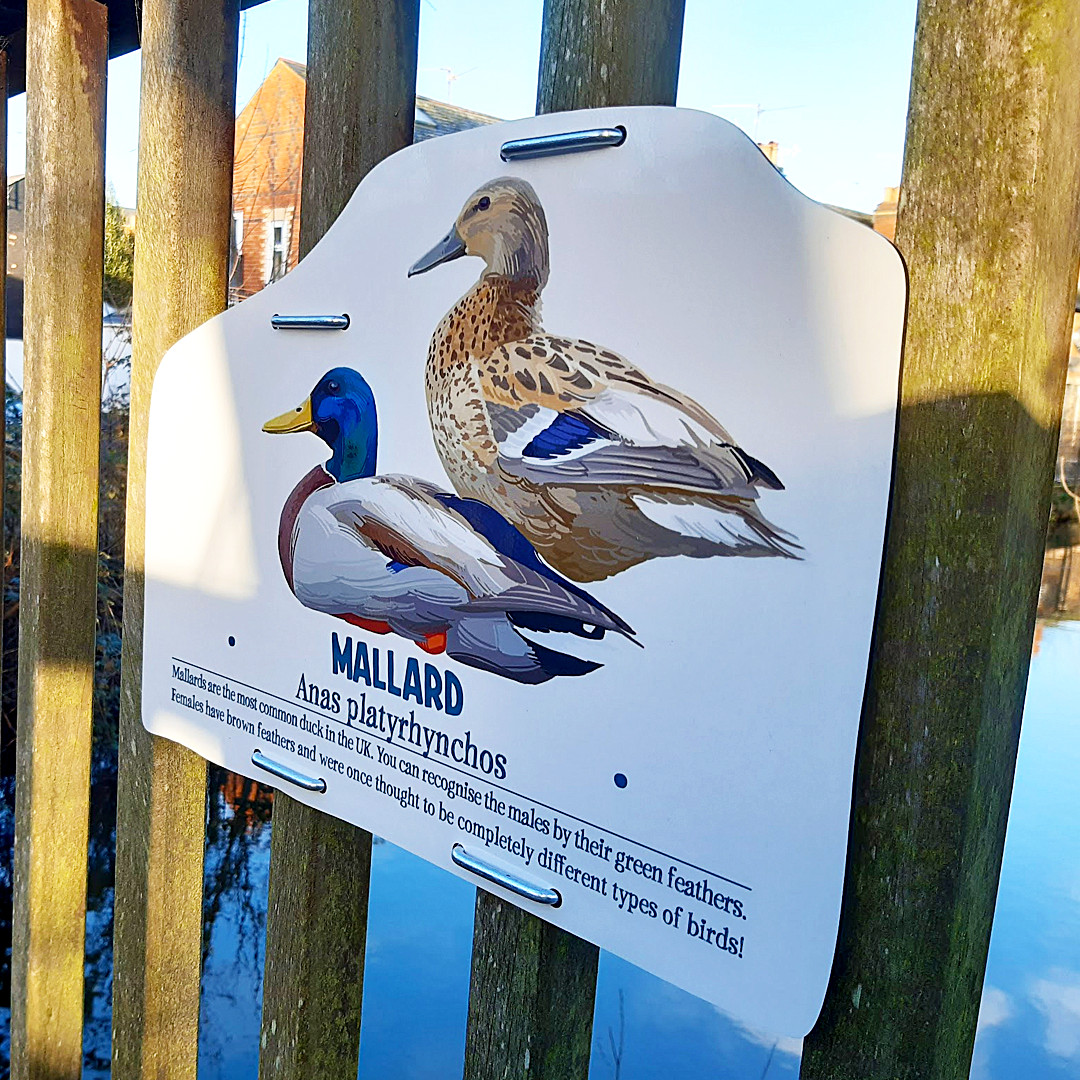
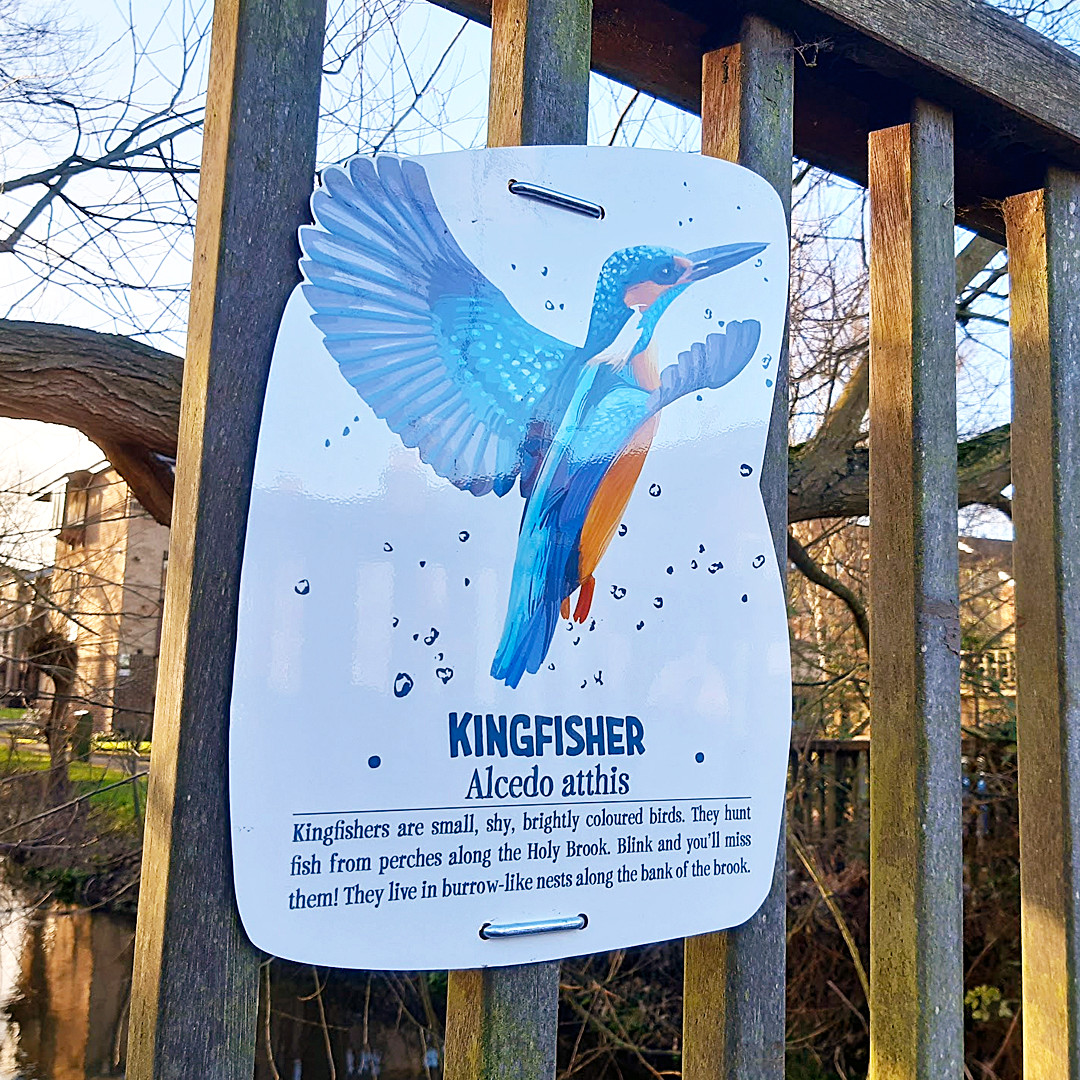
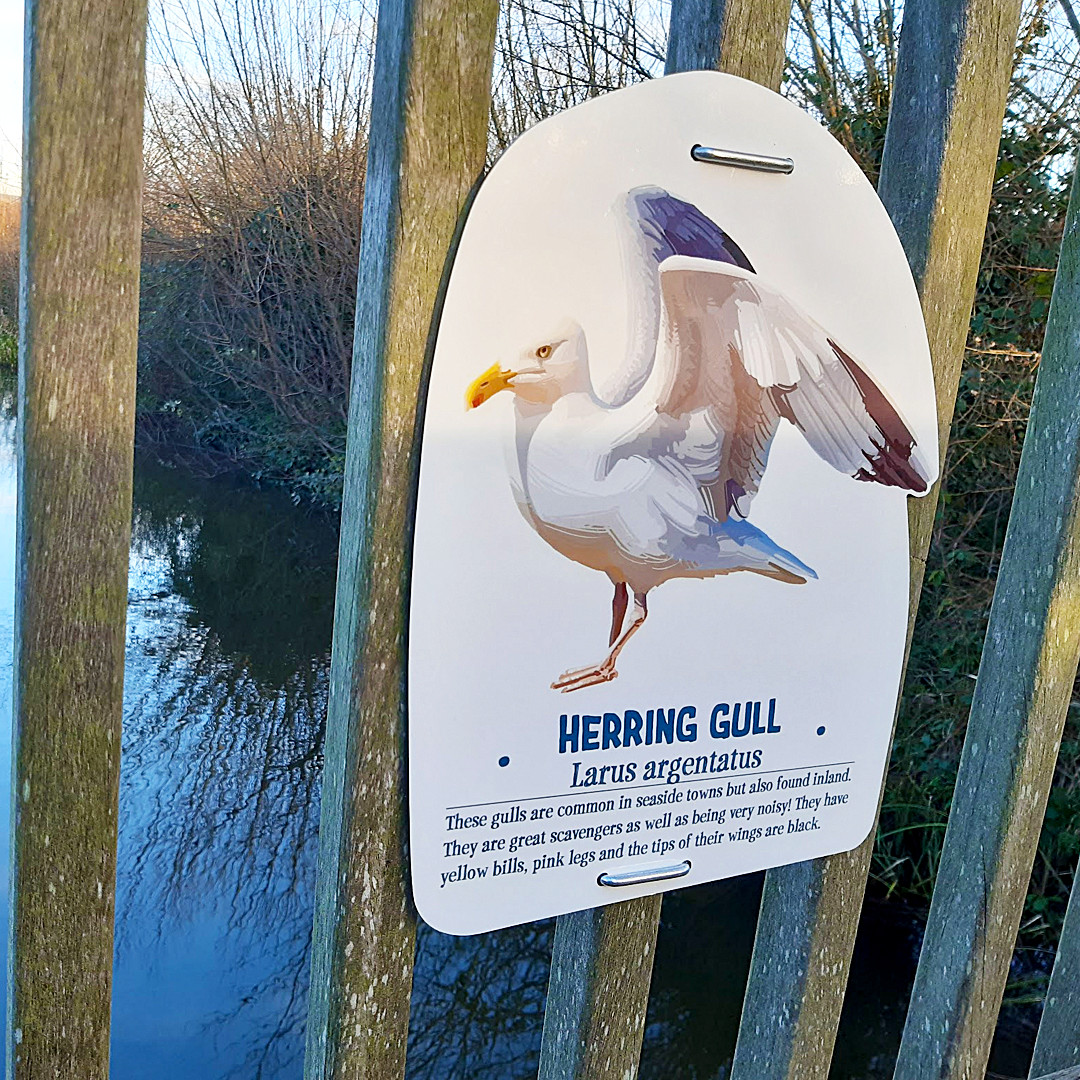
Besides that, it has to be mentioned that this mural art project is not the only one the community has in store. They are basically planning to reshape and embellish the whole natural area by cleaning the debris, posting useful wildlife signs, building all kinds of interesting floral and plant arrangements, and many more.
I think it’s important to mention some of the most important people that are involved and were the engines that pushed all the activities to completion. Natalie Ganpatsingh has been instrumental in the success of the project. Not just because of her responsibility, but also because she has been helping every time there was a little need or during all of the moments when we have been encountering obstacles.
Laura C Zanetti Domingues is a part of Commando Jugendstil, being one of the most active members of the collective, but she’s also been very important in the creation of the murals: some of the most interesting ideas that you can see depicted on the walls are hers.
We worked with a total of 56 volunteers, but David R, David N, Duncan, Ed, Adeline, Ruth, Tony, Joe, Gill, Gillian, Alex, Stuart, Beth, and Chin have been some of the most active persons that participated in the process of cleaning, preparing, painting and sealing the walls. We really can’t thank them enough for coming to the underpass to challenge hot, cold, and any other curveball that the UK weather was throwing at us.
A very interesting aspect I’d also like to touch on is that, as Reading can boast to be one of the most culturally diverse towns in the UK, so is the Holy Brook Nook project itself, gathering quite a few different nationalities in its midst, like Hong Kong, China, France, Romania, Bulgaria, many countries from the African continent and, of course, people from the UK (and some more Italians as well). It was really nice to witness all these different cultures coming together to create something beautiful and meaningful.
We will definitely come back in the near future to present the next achievements of this brilliant community initiative that brought so many people together, but for now, we’ve put together a video presentation of the whole “Holy Brook Nook” mural art project: